
Australia's Most Expensive Talent Export Program
On music education, the pipeline to emigration, and what WA is actually investing in

Approximately 80% of graduates from WAAPA's Composition and Sonic Arts program find work in the music industry. This is an impressive outcome by the standards of creative arts employment data, and the institution is justifiably proud of it. The figure appears in promotional materials, industry reports, and the kind of comparative analysis that governments commission to demonstrate the value of their tertiary education investments.
The detail that receives less prominent placement is that most of that work is not in Western Australia.
WAAPA is genuinely world-class. It produces musicians, composers, and sonic artists whose skills are competitive with graduates from the best institutions in the country and, in many disciplines, internationally. The problem is not the quality of the training. The problem is the structure of what follows it: a state that invests substantially in developing creative talent and has not built the industry infrastructure required to employ that talent once developed. The result is a pipeline that runs reliably from public investment in WA to creative economy benefit in Melbourne, Sydney, and overseas — and has been doing so for long enough that the pattern should no longer be surprising.
State parliamentary evidence shows that just over half of Western Australian public primary schools offer specialist, curriculum-based music programs.(1) In Victoria, more than 80% of government schools offer access to specialist music education. In low-socioeconomic and regional WA schools, the figure drops below 40%. The consequence of this disparity is not merely cultural — it is academic. Research consistently finds that sustained music education is associated with measurable improvements in literacy, numeracy, and cognitive development, with students in music programs outperforming comparable peers on standardised reading and verbal tests.
The Song Room program, which provides music education to disadvantaged schools, found that participating students gained approximately one year in NAPLAN reading scores relative to their peers.(2) This result is consistent across a substantial body of longitudinal research. The chronic underfunding of school music programs is not merely a cultural policy failure. It is an academic development failure, falling hardest on students in low-income and regional communities who are already most disadvantaged by the existing distribution of educational resources.
Research by Ian Harvey found that 88% of independent schools offer sequential music education meeting national standards, compared with 23% of government schools.(3) Access to quality music education in Australia is, in practical terms, largely a function of whether your family can afford private school fees.
The international comparison makes the resource commitment visible. Australian generalist primary teachers receive an average of 17 hours of music education training in their initial teacher preparation. Finland provides 350 hours. South Korea provides 160 hours. Both countries consistently outperform Australia on the literacy and numeracy measures that Australian education policy treats as its primary accountability framework.
WA's Instrumental Music School Services budget has remained approximately $20 million annually for a decade, frozen against both inflation and a growing student population.(4) The real value of that investment has declined consistently over ten years.
One of the more telling features of this policy area is the state of the data available to assess it. The most recent nationally comparable figures on Year 12 music participation date from 2001, when WA's rate was 3.69% against a national average of 6.55%. No accessible, updated national statistics have been published since. More recent state enrolment data suggests approximately 8% of WA Year 11 students study music, against a national figure of around 12% — but the absence of consistent national tracking makes precise comparison difficult.
Music does not appear in the national Key Performance Measures for schooling. There is no national accountability mechanism for arts education, let alone for music as a component of it. The 2005 National Review of School Music Education documented substantial disparities between states and identified specific gaps in provision. A 2020 follow-up study found the same problems persisting. The problems persist in part because the measurement that would make their persistence publicly visible and politically costly has never been established.
A sector that is not measured is a sector that is not accountable. The absence of current national data on music education participation is not a neutral oversight. It is a structural feature of a policy environment in which music education carries insufficient political weight to generate the monitoring infrastructure that would make underinvestment legible.
Students who do not receive quality music education in primary school are less likely to elect music subjects in secondary school. Students who do not study music in high school are less likely to pursue tertiary music qualifications. The participation numbers reflect this at each stage of the sequence.
WAAPA and Edith Cowan University collectively graduate around 140 music students per year. TAFE's Certificate IV in Music Industry recorded fewer than 50 completions across all WA campuses in 2023.(5) That is the total vocational music industry graduate cohort for the entire state in a given year: a number smaller than most secondary school graduating classes, for a sector that employs sound engineers, producers, studio technicians, venue managers, booking agents, and the full range of technical and administrative professionals a functioning music industry requires.
National creative arts workforce research consistently shows that fewer than half of music graduates remain employed primarily in their field, and that geographic mobility is high — meaning graduates from smaller states disproportionately relocate to where the industry infrastructure is concentrated. WA graduates WAAPA students into a state whose Contemporary Music Fund allocates $3 million annually to the entire independent sector, where 28% of dedicated live music venues have closed since 2010, and where the per capita public investment in music trails every comparable state. The decision to relocate is not irrational. It is a rational response to an accurate assessment of available career infrastructure.
The pattern is self-reinforcing. Parents observe that music careers in WA are precarious and that the infrastructure for building them is limited. They counsel their children toward other paths. Enrolments in music education decline. The sector loses the next generation of practitioners. The industry infrastructure, already thin, becomes thinner. The case for public investment in music education becomes harder to make against a backdrop of declining participation — which itself reflects the failure to invest.
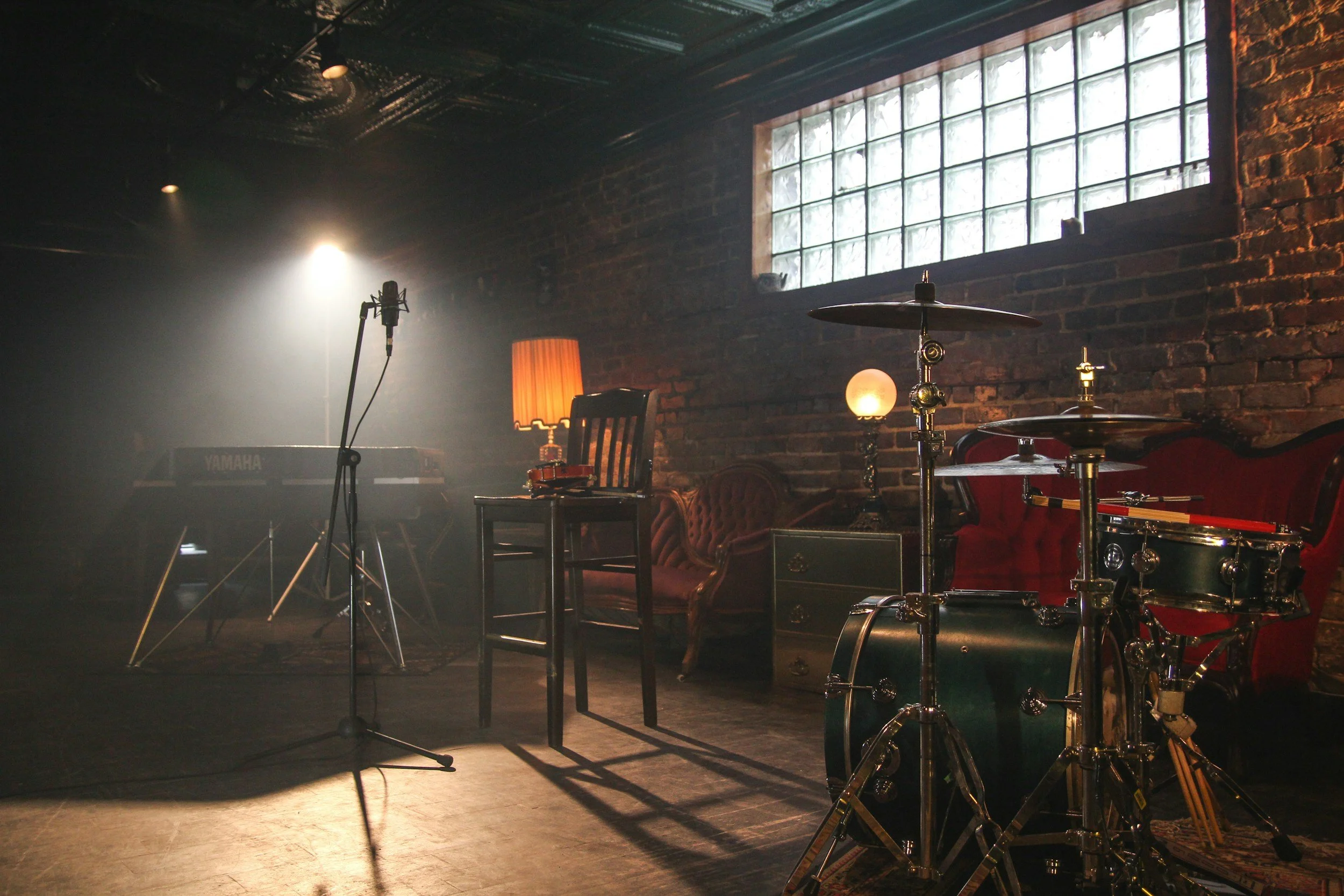
The mismatch between educational output and industry capacity is not simply a volume problem. It is a structural problem: WA trains musicians without building the industry endpoints that would employ them, and trains the wrong distribution of skills relative to what the local industry, such as it is, actually requires.
A functioning music sector needs more than performers and composers. It needs sound engineers capable of working across live, studio, and broadcast environments. It needs producers who understand both the creative and technical dimensions of recording. It needs managers, booking agents, and label administrators who understand the business of music. It needs music educators, because the sector's own workforce pipeline depends on people who can teach as well as practise. WA's current educational provision does not produce these professionals in the numbers the industry requires, and the industry does not provide the internships, apprenticeships, and entry-level employment that would allow the educational investment to translate into retained local talent.
NSW's Sound NSW program includes funded internships and direct industry placement pathways. Melbourne's music education sector has developed industry-education partnerships that create visible career trajectories from qualification to employment. Adelaide, with roughly half Perth's population, runs multiple music industry programs generating hundreds of graduates annually with clearer industry connections than WA provides.(6) Nashville's Belmont University has structured partnerships with labels and studios guaranteeing internship access. Berlin's music universities have formal relationships with venues and labels.
These are not models requiring exceptional institutional creativity or unusual public investment. They require a decision that industry-education connection is a policy objective worth resourcing — that the public investment in training musicians should produce musicians who work here, rather than musicians who are qualified to work somewhere else and make the rational decision to go there.

WA spends more than $8 billion annually on education. Music education is not separately itemised in the state budget — a budgeting convention that makes the investment invisible and therefore unaccountable.(7) Recent state budgets have committed hundreds of millions to sport and recreation infrastructure. The funding imbalance between sport and music in WA's education reflects a hierarchy of priorities that the research literature on cognitive development and academic outcomes does not support, but that is deeply embedded in the political culture of a state that has historically defined itself through physical rather than cultural achievement.
Every WAAPA graduate who relocates to Melbourne takes their skills, networks, and creative capacity to another state's economy. Every Certificate IV Music Industry graduate who finds no viable employment pathway in WA and leaves the sector represents a return of zero on the public investment in their training. Every year WA fails to build the industry infrastructure that would employ its music graduates is a year in which the state subsidises the creative economies of New South Wales and Victoria at its own expense.
The education pipeline argument has a clarity that other music policy arguments sometimes lack. It does not depend on contested claims about the intrinsic value of culture or the appropriate level of arts subsidy. It depends on the observation that public investment in training people for an industry is most efficiently deployed when the industry exists in a form that can employ them, and that building industry infrastructure is therefore not a separate policy question from building educational capacity. It is the same question.
WA is currently running an excellent talent export program. It trains musicians to a high standard, at public expense, and then provides insufficient industry infrastructure to retain them. The graduates who leave are not failures of the educational system. They are its successful outputs, making reasonable decisions in response to the conditions they find.
The conditions can be changed. The investment required — in school music education, in industry-education partnerships, in the venue and funding infrastructure that makes a music career viable here — is modest relative to the existing educational investment it would cause to generate local rather than exported returns.
What has been missing is not the money, and it is not the talent. It is the decision that the pipeline should end here.
Notes
Education and Health Standing Committee hearings, WA Parliament 2022-23; Music Victoria advocacy data. https://www.parliament.wa.gov.au
The Song Room NAPLAN research; Hallam (2010); Schellenberg (2004). https://www.thesongroom.org.au/our-impact/
Ian Harvey, Australian Journal of Music Education; 2005 National Review of School Music Education. https://www.asme.edu.au/journal/
WA Instrumental Music School Services — State Budget papers and parliamentary responses. https://www.parliament.wa.gov.au
NCVER VET completions data 2023; Good Universities Guide graduate outcomes. https://www.ncver.edu.au
Create NSW Sound NSW program documentation; Music Victoria; SA Music Industry Association. https://www.create.nsw.gov.au
WA State Budget 2024-25; WAM and MEAA advocacy submissions. https://www.ourstatebudget.wa.gov.au
If you've made it this far, you probably care about where music is headed.
So do we — that's why we built something different. The Pack Music Co-operative is Australia's first musician-owned streaming platform: cooperative-governed, human-curated, and built on the radical premise that the people who make the music should own the infrastructure that distributes it.
Join the Pack — become an early adopter member, support our crowdfunding campaign, or lend your voice as an Ambassador: 👉 packmusic.au/join-the-pack
Back the campaign — every dollar goes directly toward getting us to launch: 👉 crowdfunding.startsomegood.com/thepackmusiccoop
Read our story — where we came from, why we built it, and what we believe: 👉 packmusic.au/who-we-are
Say hello — we genuinely want to hear from you: 👉 packmusic.au/contact