
Seventy-Two Cents
On what WA's music funding figures actually say, and what they say about us
Western Australia has the strongest state economy in the country. Its per capita gross state product consistently leads the nation. Its mining royalties fund a budget that other states regard with the specific envy of people watching someone else's luck. It is, by most conventional measures, a wealthy place.
It spends seventy-two cents per person per year on contemporary music.
Coldplay doing what Coldplay do…
Victoria spends $2.42. New South Wales spends $2.23. South Australia spends $2.33. Western Australia, the state with the nation's strongest economy, spends $0.72 — the lowest per capita music investment rate in the country.(1) The Contemporary Music Fund, which supports the entire independent music sector in WA, has a grants pool of approximately $3 million annually — a figure that has grown modestly over successive funding commitments but remains, by every comparative measure, inadequate. Against a state general revenue of more than $43 billion in 2023-24, it amounts to approximately 0.007% of the state's income.(2)
Budget allocations are expressions of priority, made legible through numbers. What these figures reveal about the assumptions underlying them — about what the state believes culture is for, and whose culture is worth supporting — deserves examination.
The Western Australian government committed $419 million to fossil fuel industry assistance in 2023-24 — more than 140 times the Contemporary Music Fund grants pool.(3) Event tourism received $91.6 million — 30 times more. The Collie transition package, supporting one town's shift away from coal, totals $547.4 million — a sum equivalent to more than 180 years of the annual CMF grants pool.(4)
To be precise about the Collie comparison, because precision is useful here: this is not an argument against supporting Collie, whose community faces a genuine transition challenge and deserves genuine support. It is an observation about proportionality. The state can find half a billion dollars for a single regional industry transition. Finding an additional few million for the infrastructure that sustains the independent music sector across the entire state has not registered as the same kind of priority.
WA's arts budget allocates approximately 1.9% to contemporary music. New South Wales and Victoria each dedicate 11 to 12% of their arts budgets to the sector.(5) The gap is not explained by the relative size of the sectors — WA has a substantial independent music community, documented across WAM and Live Performance Australia surveys. It reflects the weight the state budget gives to music as a category of cultural infrastructure worth supporting.

Earlier this year the Premier announced a $2.75 million boost to the local music industry. The announcement was received with cautious optimism by a sector that has grown accustomed to cautious optimism as its default political register — enough enthusiasm to acknowledge that any increase is better than none, not enough to mistake a press release for a policy commitment.
The caution was warranted. The $2.75 million is a four-year total covering 2025-26 to 2028-29, not an annual increase. It includes $1.5 million in additional competitive CMF grants and $1.25 million for a Live Music Package covering the WA Gig Guide and WA Music Week.(6) Distributed over four years, the new funding amounts to approximately $687,500 per year in additional grants — a meaningful sum to an individual artist or a small venue, and a modest increment in the context of a fund whose existing allocation is already inadequate by every comparative measure available.
The announcement is worth dwelling on not to diminish the increment, which is real, but because the framing illustrates a pattern the sector encounters regularly: the political performance of support for local music, calibrated to generate positive coverage without generating the budget commitment that would make a structural difference. A four-year total presented as a boost. A per capita investment that trails every comparable state, defended as evidence of commitment to local culture.
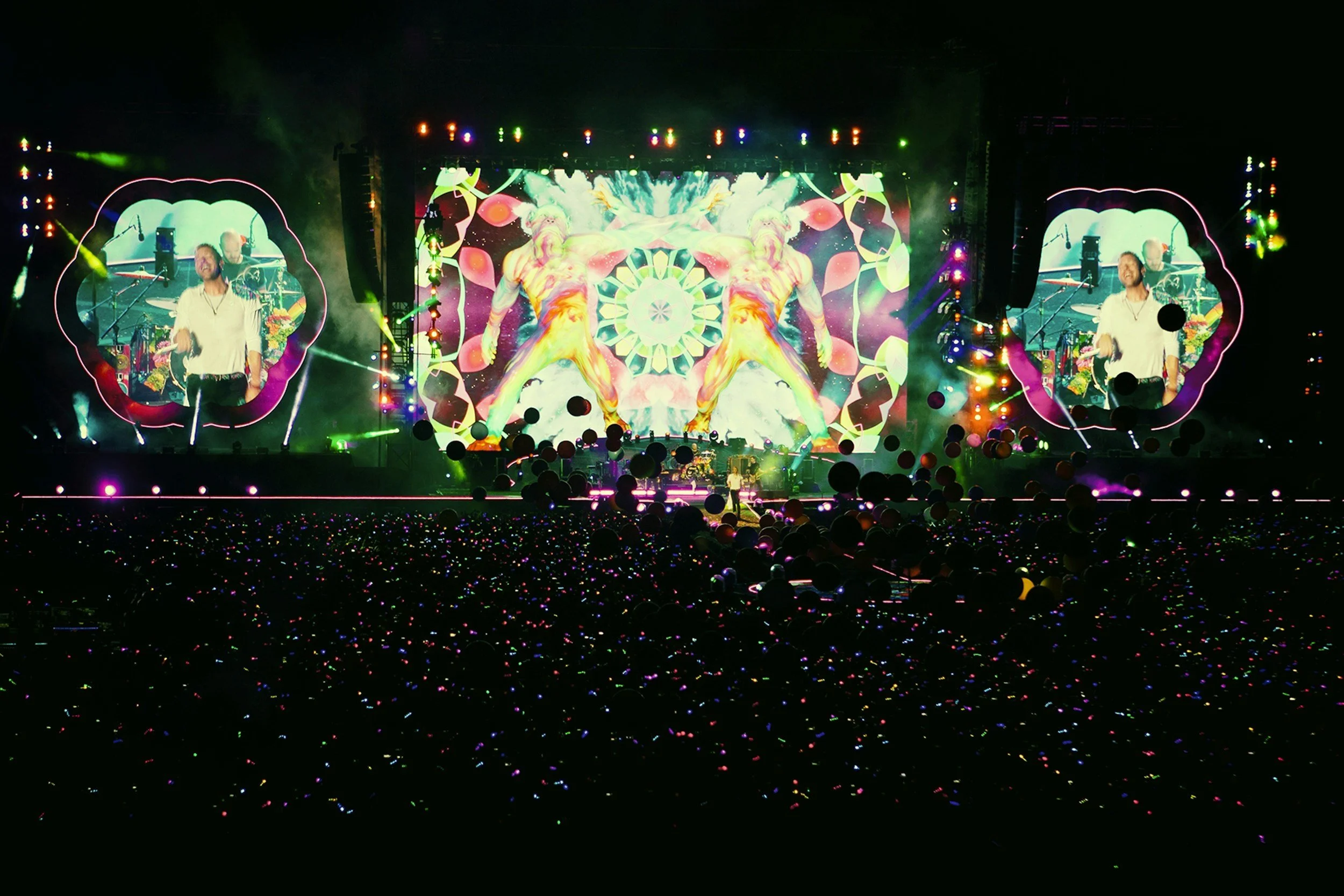
In July 2024, The Guardian reported that the WA government paid $8 million to Live Nation to subsidise two exclusive Coldplay concerts at Optus Stadium in November 2023.(7) Tourism WA confirmed the payment after government documents were obtained, describing the events as a 'major tourism coup.' The $8 million allocated to bring a single international act to Perth for two nights represents nearly three years of the Contemporary Music Fund grants pool — spent on a band that flew in, played, and left.
The Björk Cornucopia performances at the 2023 Perth Festival were also supported through Tourism WA. The government declined to disclose the amount, invoking commercial-in-confidence provisions after being questioned in parliament. The WA Auditor General confirmed the amount was not publicly known, and that the decision to withhold it from parliament was reasonable given competitive commercial considerations in the global events market. We do not know what Björk cost. We do know the government considered the amount worth concealing.
The economic impact argument for major event investment has merit in some contexts. International headline acts draw visitors, fill hotels, and generate hospitality spend. But this does not explain why the investment calculus consistently favours artists who will leave after the show over artists who live here, pay tax here, employ local sound engineers and venue staff and booking agents year-round, and contribute to the sustained cultural life of the state in ways that a single concert cannot.
The local independent music sector generates economic activity continuously. It develops the audience culture that makes WA a viable market for international touring acts in the first place. It provides the performance infrastructure that major events depend on when they arrive. An international act arrives to a subsidy measured in millions. The sector that makes the arrival meaningful receives a grants pool of $3 million, distributed across every independent musician in the state.
The City of Sydney's economic analysis of its live music sector found a benefit-cost ratio of 3.22:1 for every dollar invested in grassroots live music — a figure that, if applied to WA's chronic underinvestment, suggests the state has been leaving significant economic value unrealised for years.(8) WA's own economic data supports the broader principle: the independent music sector generates cultural and economic activity at a multiplier that makes the current funding level look less like prudent budget management and more like leaving money on the table.
The consequence of sustained underinvestment is a talent pipeline that consistently empties toward the eastern states. WA already delivers significantly less music economic output than Melbourne or Sydney despite the quality of its musicians, who are competitive with their eastern-state counterparts by any reasonable measure. The gap is explained by the conditions available for building a career.
Melbourne and Sydney have more venues, more funding, more industry infrastructure, and the accumulated critical mass that makes the next stage of a career viable. WA musicians who reach the point of needing those conditions either relocate or contract their ambitions to fit the available infrastructure. The producing region bears the development cost. The receiving region captures the career.
The Texas Music Office's biennial economic impact studies provide a useful benchmark for what sustained government commitment to the music sector produces. Texas's music industry — supported by a dedicated state music office since 1990, the first of its kind in the United States — generated $31.7 billion in annual economic activity in 2024, employing nearly 196,000 people and contributing $564 million in tax revenue.(9) The investment is in infrastructure, data, advocacy and export development — the exactly the kinds of systemic support that WA's current model does not provide at scale.
Iceland's government supports its music sector through the Iceland Music Fund and the Record Iceland rebate scheme, which offers a 25% rebate to international artists recording in Icelandic studios, attracting global projects and building local capacity simultaneously. Iceland's creative industries contribute approximately 3.5% of GDP per capita.(10) The country's approach — consistent structural support rather than one-off headline investment — has produced a music culture internationally disproportionate to its population of 370,000.
South Korea's investment in its music export infrastructure, coordinated through the Korea Creative Content Agency (KOCCA), helped transform a domestic industry into K-pop, now one of the most commercially significant cultural exports in the world.(11) In all three cases the common thread is not exceptional circumstances but a political decision to treat the music sector as an investment, applied resources accordingly, and accepted that the returns compound over years, not press cycles.
These are not cases from jurisdictions with vastly larger budgets or unusually favourable circumstances. They are cases from places that decided the music sector was worth taking seriously. The decision preceded the outcome.
Closing the gap between WA's per capita music investment and the national average does not require a radical reallocation of the state budget. Matching Victoria's $2.42 per person across WA's population of approximately 2.95 million would require roughly $7.1 million annually — an increase of around $4 million on the current CMF grants pool.(12) In a state generating more than $43 billion in annual revenue, this is a priority question, not a resource constraint, and it has been answered consistently in the same direction.
WA's economic strategy is, by the government's own account, focused on diversification. The creative industries — high-value, knowledge-intensive, structurally resistant to commodity price volatility — are a standard component of economic diversification strategies in comparable jurisdictions. Developing those industries requires both the educational infrastructure to produce skilled practitioners and the industry infrastructure to employ them. WA currently underinvests in both, and then watches its talent depart for more hospitable shores.
The argument that serious music investment would position WA as an Asia-Pacific music hub is not fanciful. Perth is closer to Singapore, Jakarta, and Tokyo than to Sydney. The appetite for Australian music in Asian markets has been demonstrated by the export success of Australian artists who have built careers in those markets with minimal institutional support. What those artists needed, and largely did not have, was the infrastructure to develop their careers to the point where export was viable: the venues, the funding, the industry development support that other states provide and WA does not.
Seventy-two cents per person is the number that emerged from a series of budget processes in which contemporary music was not a priority, in which nobody with sufficient political leverage made the sustained case that it should be, and in which the people most affected — independent musicians working three jobs to fund the next recording session — had the least capacity to make that case effectively.
The specific interventions that would move the dial are documented: increased core funding for the Contemporary Music Fund, a dedicated venue support program, regional touring subsidies, career development grants structured around income supplementation, and export development support for WA artists building interstate and international audiences. Each exists in some form in Victoria or New South Wales. Each produces measurable outcomes.
What the current figures communicate to every musician in WA calculating whether to stay or go, every venue operator trying to absorb compliance costs the state has declined to share, every emerging artist working out whether the infrastructure exists here to support the career they want to build — is that the answer to that calculation is no. In seventy-two cents.
That number can be changed. The question is whether we will change it before the people it is failing have already left.
Notes
Live Music Office / Australia Council for the Arts comparative per capita music funding analysis, 2023. WAM advocacy data cross-referenced with state arts agency annual reports. https://www.livemusicoffice.com.au
WA State Budget 2023-24: general government revenue of $43.2 billion. WA Office of Financial Management. https://www.ourstatebudget.wa.gov.au/2024-25/economic.html
Australia Institute — Fossil Fuel Subsidies in Australia 2024. WA state government figure: $419 million in 2023-24. https://australiainstitute.org.au/report/fossil-fuel-subsidies-in-australia-2024/
WA Government — Collie Transition Package: $547.4 million committed. Confirmed via WA Government Collie Just Transition page and Energy Magazine reporting on the package. https://www.wa.gov.au/organisation/department-of-the-premier-and-cabinet/collie-transition-package
State arts funding agency annual reports; Australia Council national arts funding analysis, 2023. https://www.australiacouncil.gov.au
Department of Creative Industries, Tourism and Sport — Contemporary Music Fund program page. $2.75 million over 2025-26 to 2028-29 confirmed. https://www.cits.wa.gov.au/funding/creative-industries-funding/cmf-development-program
The Guardian — 'WA government gave $8m to Live Nation Entertainment to subsidise Coldplay concerts', July 2024. Confirmed by Tourism WA statement. https://www.theguardian.com/culture/article/2024/jul/08/wa-government-live-nation-coldplay-concerts-subsidy-ntwnfb
City of Sydney — 'The Economic and Cultural Contributions of Live Music Venues', 2020. Benefit-cost ratio 3.22:1 (excluding non-use value, for direct comparison with other studies). https://www.cityofsydney.nsw.gov.au/-/media/corporate/files/2020-07-migrated/files_v/valuing-live-music-venues-accessible.pdf
Texas Music Office — 2025 Texas Music Industry Economic Impact Report. Released February 2025. https://gov.texas.gov/news/post/governor-abbott-releases-2025-texas-music-industry-economic-impact-report
Loud and Quiet — 'Iceland Airwaves 2024, and the success of a country bothering to invest in its musicians', November 2024. Iceland Music Fund and Record Iceland scheme details confirmed via Iceland Music Export. https://www.loudandquiet.com/short/iceland-airwaves-2024-and-the-success-of-a-country-bothering-to-invest-in-its-musicians/
Korea Creative Content Agency (KOCCA) — annual content industry statistics. https://www.kocca.kr/en/main.do
WA population approximately 2.95 million (ABS 2024). 2.95M × $2.42 = $7.14M. Current CMF grants pool approximately $3M. Increase required: approximately $4.1M annually. https://www.abs.gov.au/statistics/people/population
If you've made it this far, you probably care about where music is headed.
So do we — that's why we built something different. The Pack Music Co-operative is Australia's first musician-owned streaming platform: cooperative-governed, human-curated, and built on the radical premise that the people who make the music should own the infrastructure that distributes it.
Join the Pack — become an early adopter member, support our crowdfunding campaign, or lend your voice as an Ambassador: 👉 packmusic.au/join-the-pack
Back the campaign — every dollar goes directly toward getting us to launch: 👉 crowdfunding.startsomegood.com/thepackmusiccoop
Read our story — where we came from, why we built it, and what we believe: 👉 packmusic.au/who-we-are
Say hello — we genuinely want to hear from you: 👉 packmusic.au/contact