
The archive that doesn't exist
On unsigned artists, undigitised catalogues, and the particular cruelty of losing music that never got loud enough to be missed
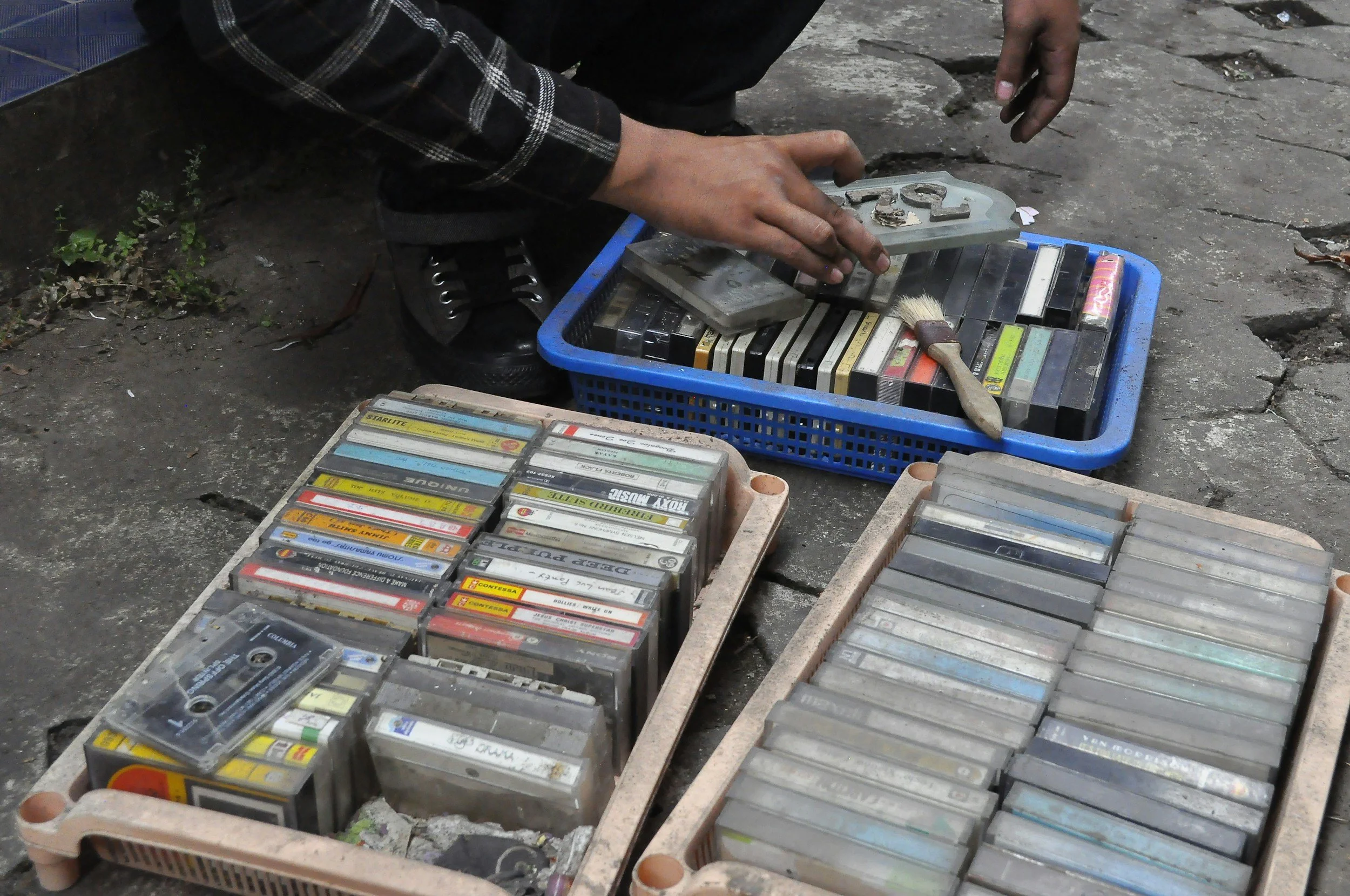
There is a kind of grief that doesn't have a good language yet. It arrives when you realise something important has been lost without an announcement, without ceremony, without the dignity of anyone noticing in time. Anemoia - a term coined in The Dictionary of Obscure Sorrows that specifically means feeling nostalgic for a time or a place you have never known - perhaps captures it somewhat. The record shop closes, tapes deteriorate, the band breaks up and the CDs they pressed in 1997 become the kind of thing you find at a car boot sale for fifty cents, and then you don't even find them there anymore. They are, for all intents and purposes, gone.
This is the grief that sits in my soul when I think about the future of music.
The music industry's relationship with its own past is, generously, selective. We have preserved and re-preserved and remastered and Deluxe Edition-ed the same several thousand albums so many times that some of them have begun to feel immortal. Meanwhile, the music made by the millions of artists who built actual communities, who shaped local tastes, who gave generations of people in specific places their sound and their culture and their sense of belonging - that music is, in very large quantities, quietly disappearing.
And I’m not talking only and entirely about music made by artists long past. In many cases the musos who made this disappearing catalogues are very much still alive, in many cases. I know them. They are friends. They are in their forties and fifties and sixties and seventies. They have kids and grandchildren. Many of them still play on local stages. I still go to their gigs. They still come to mine. They live around the corner. Their work sits in vinyl and tape and compact disc form, in varying states of neglect, in storage units and sheds and boxes under beds, on masters never digitised. It has never been on Spotify. It has never been on Apple Music. It has never existed as a stream of data that anyone, anywhere, on a phone, could just find.
This is the situation The Pack wants to understand, and then do something about.
What we mean when we talk about the archive
The word "archive" tends to conjure certain images: scholars, white gloves, climate-controlled rooms, the National Film and Sound Archive, institutional gravitas. But really, to us, an archive is simply the deliberate preservation of the past for future use. Your grandmother's box of photographs is an archive. The mixtape someone's daughter found after her father died is an archive. The corrugated iron shed behind a retired band member's house in Geraldton, containing milk crates of reel-to-reel masters, is an archive.
The question is not whether Australia has institutional musical archives. It's whether the archive we have reflects the music that was actually made, or only the music that was already well-resourced enough to survive the transition between formats. That transition is the central event of the last thirty years of music history, and we have not reckoned with what it cost.
Before streaming normalised itself as the all pervasive infrastructure, music went through several violent rounds of format change. Vinyl gave way to cassette gave way to CD gave way to digital download gave way to streaming. Each transition had winners and losers, but the losses were distributed extraordinarily unevenly. Major labels had the resources to migrate catalogues. They had the legal infrastructure to negotiate licences, the financial muscle to invest in digitisation, the relationships with distribution platforms to get content uploaded. Independent artists, unsigned artists, artists who had pressed a thousand CDs at a local manufacturer and sold them out of the back of their car at gigs - they had none of that. Their path into the streaming era required individual action, individual cost, and individual knowledge of systems most of them had no reason to have.
Many of them never made it across.
The real consequence of the loss
But this is not a story about obscure music that nobody wanted not making the cut. That framing just compounds the loss and further disrespects local music’s importance to local communities. I’m tired of this rhetoric.
The artists who recorded outside the major label system were not marginal to their communities. They were central to them. They played the venues that built local music cultures. They influenced the bands that came after them. They were the sound that a particular suburb or town had on a Saturday night. Their music was heard by tens of thousands of people across their active years, and those people remember it with the specific fondness reserved for the things that were present during the formation of who you are.
The loss is not musical marginalia. It is a core record of what Australian culture sounded like at a community level, which is to say, the level at which most people actually experience culture.
When a commercially viable major-label album goes undigitised, there is institutional apparatus that eventually notices. When an independent recording from a Western Australian band from 1983 goes undigitised, nobody in any institution is looking for it. There is no system whose job it is to know it existed. There is no mechanism by which its absence from streaming registers as a gap. It just quietly isn't there.
AI is not the primary villain of this story, but it is worth considering the particular threat it adds. Generative music AI is trained on the music that exists as accessible data. The music that never made it to streaming doesn't exist as data. This means that when AI systems model "what Australian music sounds like" or "what regional community music has historically sounded like," they are building that model on the surviving archive, not the whole archive. The music that got left behind doesn't just fail to be preserved - it fails to even influence the machines that are now generating the next wave of music. Not that I think that’s a bad thing necessarily - the theft of cultural sounds is something we’ve explored in previous blogs, and certainly not something we endorse - but I do think that the gap in the record is significant, and telling.
The economics of the loss
There's a financial analysis worth considering here alongside the cultural one, because they're connected in ways that often get overlooked.
The music industry's standard account of independent artists treats them as participants in a market that rewards quality with exposure and exposure with income. In that account, an artist whose music is not on streaming has simply not yet completed the necessary steps to access the market. The steps are described as straightforward. It is simply not popular - and that’s on the artist.
This account is historical, and it makes me uncomfortable. The artists whose catalogues were formed before streaming infrastructure existed were not delinquent in their market participation. They were operating in a different market, one in which the path to an audience ran through pressing plants and record stores and community radio relationships and physical distribution networks, and in which none of those things required or produced the kind of digital assets that the streaming era subsequently demanded.
When the market changed around them, the cost of adaptation fell entirely on the individual artist. The labels that had benefited from those same artists' presence in live music scenes, who had sometimes released their music, who had sometimes not — those institutions did not pay the migration cost. The streaming platforms that now benefit from the presence of music across genres and decades in their catalogue contributed nothing to the project of getting independent artists' pre-digital catalogues onto their services.
Compare this to the way government intervenes when industries it actually respects hit turbulence.
When the WA Government decided to wind down Collie's coal-fired power stations, it did not tell the town's workers: best of luck, the market has spoken, perhaps you should diversify your skills. It committed a $547.4 million Collie Transition Package — including a $230 million Collie Industrial Transition Fund and $300 million for decommissioning work — on top of more than $115 million already committed since 2017, bringing the total to almost $700 million.[1] When Griffin Coal hit crisis point mid-transition, the government elected to bail it out to the tune of a further $220 million.[2] The principle at work is clear - if an industry ‘matters’, if ‘real’ workers are at stake, the state does not stand aside and let disruption simply happen to people.
When WA ended native forest logging, a Native Forestry Transition Plan was prepared to guide the transition for affected workers and communities,[3] with dedicated funds for business adaptation, retraining and supply chain resilience. Individual workers could access transition payments of up to $45,000.[4]
And now, with the coal chapter genuinely closing, Premier Roger Cook has announced a proposed large-scale defence manufacturing hub in Collie, with expressions of interest open to local, national and international companies to help shape a precinct focused on advanced defence manufacturing, autonomous systems, precision manufacturing and energetics.[5] Missiles, in Collie, where the coal used to be.
At its peak, Collie's coal industry directly employed around 1,200 people, with a further 1,000 employed indirectly in power generation and supply.[6] By the time the transition was underway, the union estimate was 1,800 coal-related jobs needing replacement.[7] These are real people, with real families, and none of what follows is an argument that they should have been left to manage alone.
But hold that number next to this one. The WA contemporary music industry directly creates almost 3,000 full-time jobs — and that figure counts only those for whom music is their primary profession — generating nearly $1 billion in value to the WA economy and accounting for $149 million in wages.[8] Nationally, the Australian music industry generated revenues of $8.78 billion and contributed $2.82 billion in direct gross value added to the economy in 2023-24.[9] The median music artist income across that $8.78 billion industry was $14,700.[10] Ah, the irony.
Music employs more people than coal. Music generates more economic activity than coal. Music, unlike coal, has a future. And its disruption has no end date — it is not a managed phase-out with a known timeline, but a structural collapse that has been unfolding for two decades with no floor in sight.
The state's response to this? WAM — the peak body for Western Australian music — secured what it described as "significant government funding" in 2024: $500,000 per year for two years.[11] The most ambitious music-specific commitment in the recent state budget was nearly $40 million for the entire creative industries sector — theatre, dance, visual arts, music, literature — across three years.[12] The Lotterywest arts infrastructure program, announced with genuine fanfare, commits $45 million across three years to upgrade arts and culture spaces statewide.[13] Welcome. Also, to be precise, roughly what WA spent bailing out a single coal mine for eighteen months while it figured out what came next.
The 1,800 coal workers of Collie received approximately $389,000 in public investment each. Western Australia's 3,000 music workers have received, in the most generous possible reading of state funding commitments, something in the order of a few hundred dollars per person per year - and that is certainly not shared equally.
What am I really saying here? The state knows how to care about industries when it decides to. It has a framework for this. It reaches for the tools readily, and funds them accordingly. It has simply never decided that music is the kind of thing those tools are for.
This is not an argument about deserving. It is an observation about consistency — about what "economic value" actually means in practice, when government decides which industries warrant active support and which are expected to adapt alone. The question is not whether musicians deserve the same treatment as coal workers. The question is why we don't even notice the inconsistency.
This matters for us at The Pack because it is exactly the kind of injustice that a musician-owned platform should be built to address. Which is what we’re doing.
Who we're actually talking about
The Pack is proposing a research project, which is going to require some careful demographic and geographic work before it can build a methodology. But the reality for the affected population is already obvious.
The independent artists most likely to have accessible undigitised pre-streaming catalogues are those who were active primarily in the 1950’s through to roughly 2008, operating outside the major label system, and who did not have the resources or incentive to migrate their catalogues when the format shifted. That description fits a very large number of people.
In Western Australia specifically, the geography of the state creates a compounding factor. Perth's isolation has historically meant that a significant amount of music was made for and distributed within WA that never achieved eastern-states coverage, let alone international distribution. The economics of independent music in a city this far from the rest of the country's music infrastructure meant that many artists were making music for regional audiences, regional venues, and regional radio, with no realistic prospect of the national exposure that might have created a commercial incentive for catalogue management. Their work was local by necessity. It was also, for that reason, often extraordinarily specifically local - music that sounded like this place, that described this place, that was made by people who were going to keep living here. Our music.
That is what makes its preservation culturally urgent. It's also what makes it invisible to the systems that decide what gets preserved.
Rural and regional artists across Australia face the same problem at higher intensity. They are further from a capital city, further from the networks that facilitate catalogue management, further from the studios that are now offering digitisation services, further from the technical communities where knowledge about distribution infrastructure circulates. The gap between "this tape exists" and "this tape is accessible to the people who grew up with the music on it" is significantly larger when the tape is in Kalgoorlie or Broome or Carnarvon than when it's in Subiaco.
Indigenous artists occupy a distinct position within this landscape that requires its own care. Community music recorded by First Nations artists in the decades before streaming often carries cultural significance that extends well beyond the commercial music context. It may contain language, ceremony-adjacent material, or community history that the artists and their communities have strong interests in protecting. Any digitisation and distribution project touching Indigenous catalogues needs to be built around community sovereignty from the start, not grafted on as a consultation process at the end, and certainly not used to train AI systems. The Pack is, by nature, better positioned to do this than a commercial platform would be - but only if we're honest with ourselves about what that requires. It’s not small job. Nor a cheap one.
What can be done
The Pack's proposed research project sits at the intersection of several practical challenges, none of which is insurmountable individually but which in combination require real resourcing and support.
The first is identification. You cannot digitise a catalogue you don't know exists. This means building relationships with artists, with regional music networks, with community radio stations that may hold physical recordings, with libraries and pressing companies, with recording studios and masterers, with family members of artists who died before the streaming era arrived. It is not a database project. It is a human relationships project that eventually produces a database. It is a literal labour of love.
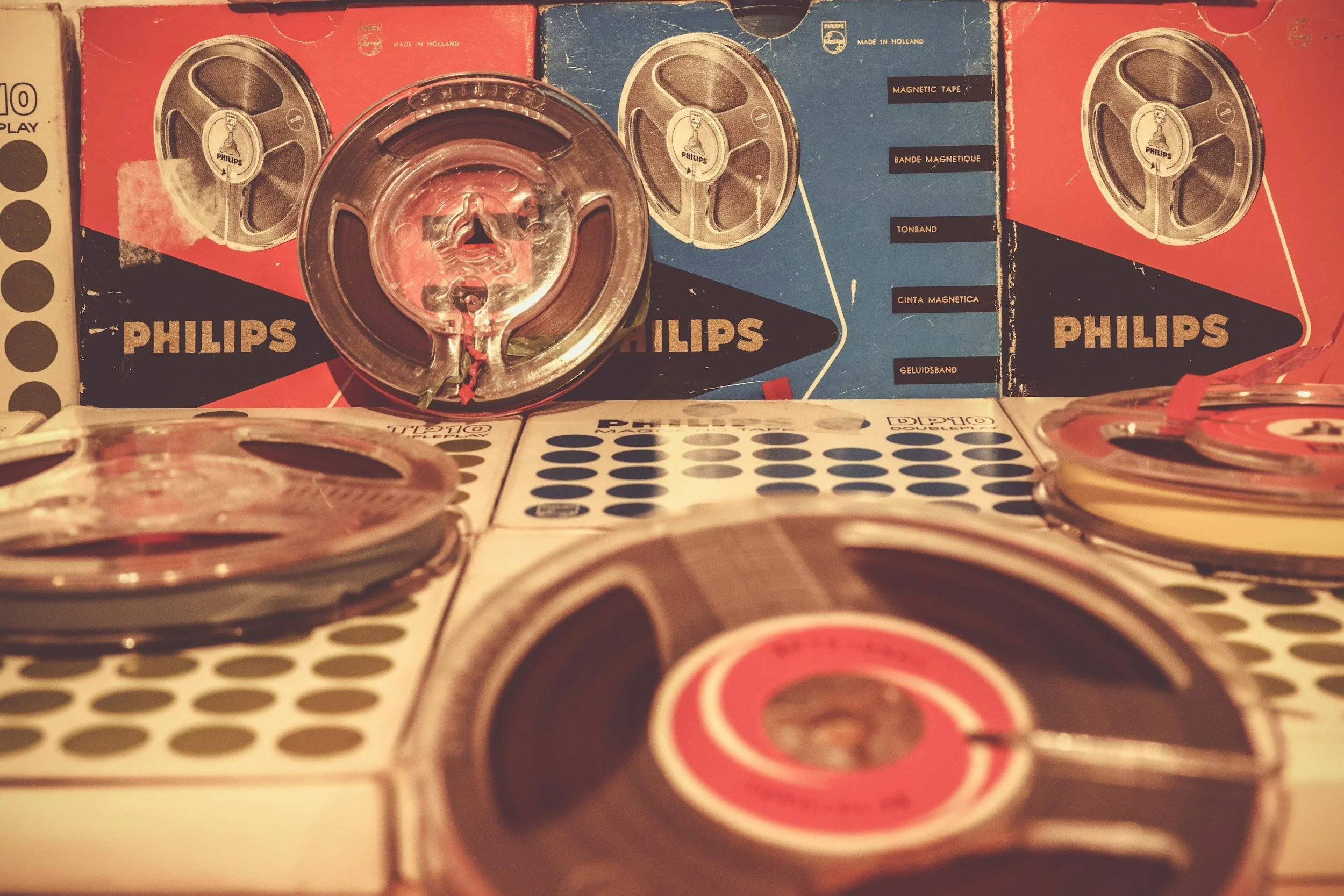
The second is the physical work of digitisation. Cassette tapes, reel-to-reel recordings, and vinyl masters all require different handling and different equipment. Tapes degrade - the "sticky shed syndrome" that affects polyester-based tapes is well documented, and the window for recovering recordings from affected tapes is closing. The equipment to do this work properly is specialist and the operators who know how to use it are not in infinite supply. There is an argument that a mobile digitisation service, capable of travelling to where the recordings are rather than requiring artists to transport fragile physical media, could serve regional WA in a way that a metropolitan-only service cannot.
The third is rights clarification. Some catalogues will involve straightforward rights situations: the artist owns their work outright and can authorise distribution. Others will be more complex - involving record labels that no longer exist, co-writers who can't be located, samples from recordings the artist didn't own, or oral agreements that were never documented. None of this is impossible to navigate, but it requires legal knowledge and administrative time that individual artists generally don't have.
The fourth is distribution - and here The Pack has something specific to offer. Getting a digitised back-catalogue onto a major streaming platform is technically possible. But the major platforms don't have any particular investment in helping audiences find music by unsigned artists who were active in regional Western Australia thirty years ago. The Pack does. Our geo-fenced local discovery and community-audience orientation means that digitised catalogues from WA artists can actually reach the audiences most likely to want them: people who grew up in the same communities, who remember the music, who have been wondering for years why they can't find it anywhere.
The cultural argument
There is a version of this argument that talks only about preservation and access, as if music were a library archive whose value is purely historical. I don’t think it is.
Music is not just a record of culture. It is a mechanism by which communities understand themselves and their own continuity. When you can listen to the music that was playing in the town where you grew up, made by people who were your neighbours, you are not just accessing nostalgia. You are accessing an account of your community that was made from inside it. You are hearing what the place thought it sounded like. You are in contact with what was possible there, what was being imagined there, what stories people were telling themselves about who they were.
That contact has consequences. It makes local history feel inhabited rather than archived. It creates a bridge between generations that is more portable than oral history and more emotionally immediate than written record. It reminds younger artists in those communities that making music in that place has a history - that they are in a lineage, not a vacuum.
The alternative, the world in which that music simply doesn't exist in any accessible form, is one in which communities lose a particular kind of self-knowledge. The loss is quiet. Nobody writes a headline about it. But it changes what a place knows about itself, and those changes accumulate. To me, this is a source of real sadness.
The Pack is being built on the premise that music does social and cultural work that is not captured in streaming numbers or royalty statements. Recovering and preserving the pre-streaming independent catalogue is an extension of that premise into the past. The road runs in both directions. It has to.
Where we're starting
This is the beginning of a conversation, not the end of one. The Pack is at the early stages of scoping what a recovery and research project would look like, what partnerships it might need, what funding it might require, and what communities it should prioritise first.
If you recorded music before streaming - on tape, on vinyl, on CD - and that music is not currently accessible on any digital platform, we want to hear from you.
If you know of artists in your community whose work fits this description, we want to hear about that too.
If you work in digitisation, in music rights, in community radio, in regional arts infrastructure, or in Indigenous cultural heritage, and you think your work intersects with this project, get in touch.
If you work in a government agency and actually do purport to value our cultural legacy, we’d love your support.
The transition phase is not complete and we have time, still, to change that - but the window is closing faster than most people realise.
Notes
[1] WA Government, Collie Just Transition, Department of the Premier and Cabinet. The $547.4 million Collie Transition Package was announced in 2022; total committed investment including prior funding reached almost $700 million.
[2] Mining and Energy Union, WA Premier misses opportunity to secure Collie's future, December 2023; pv magazine Australia, $220 million bailout so Griffin Coal mine can continue to mid-2026, December 2023.
[3] Canadian Institute of Forestry, Native Forestry Transition Plan, Western Australia; WA Government, Native Forest Transition, Department of Jobs, Tourism, Science and Innovation.
[4] WA rolls out transition packages for native forestry workers, Timberbiz, March 2022. The maximum transition payment for a long-term worker made redundant was $45,000.
[5] WA announces defence manufacturing hub, Manufacturers' Monthly, May 2026; ABC News, Missiles and weapons manufacturing hub slated for WA, May 2026.
[6] State Library of Western Australia, Coal, Mining and Energy Western Australia exhibition. Direct employment figure circa early 2000s.
[7] Collie's just transition: A blueprint for the world's 8 million coal workers, The Progress Playbook, March 2025. AMWU estimate of coal-related jobs requiring replacement.
[8] WAM / Edith Cowan University, Research reveals WA contemporary music industry worth nearly $1 billion, 2016. Note: as a primary-profession-only count, the true employment and economic footprint is higher.
[9] Music Australia / McAtamney & Advisors, The Bass Line: Charting the Economic Contribution of Australia's Music Industry, Creative Australia, June 2025.
[10] Ibid.
[11] WAM, WAM secures significant government funding and embarks on new strategic direction, July 2024.
[12] WA State Budget 2026-27, as reported in Major State Budget support for key arts organisations and events, The National Tribune, April 2026.
[13] Lotterywest, Lotterywest grants for a more Creative WA.
If you've made it this far, you probably care about where music is headed.
So do we — that's why we built something different. The Pack Music Co-operative is Australia's first musician-owned streaming platform: cooperative-governed, human-curated, and built on the radical premise that the people who make the music should own the infrastructure that distributes it.
Join the Pack — become an early adopter member, support our crowdfunding campaign, or lend your voice as an Ambassador: 👉 packmusic.au/join-the-pack
Back the campaign — every dollar goes directly toward getting us to launch: 👉 crowdfunding.startsomegood.com/thepackmusiccoop
Read our story — where we came from, why we built it, and what we believe: 👉 packmusic.au/who-we-are
Say hello — we genuinely want to hear from you: 👉 packmusic.au/contact