
Digital Sharecroppers
On platform capitalism, the prosperity illusion, and why artist poverty is no accident
The music streaming economy operates on the same extractive principles as every other form of platform capitalism. This is frequently obscured by the specifics of the music industry — the romance of artistic vocation, the complexity of rights and royalties, the genuine difficulty of building a sustainable creative career — in ways that make it easy to treat as a unique and complicated problem rather than a familiar one in a new setting.
It is not unique. Platforms extract value from the workers who generate it and redistribute that value to shareholders who contribute capital and technological infrastructure. The workers receive a fraction of what their labour produces. The shareholders receive the remainder. The ratio between those fractions has, across two decades of streaming platform development, moved consistently in the same direction.
Uber drivers work longer hours for declining per-trip rates while Uber's market capitalisation grows. Amazon warehouse workers navigate injury rates that exceed industry averages while Amazon posts record profits. Spotify artists require millions of streams to generate income equivalent to a minimum wage while Daniel Ek's personal fortune is estimated at $9.9 billion and his investment portfolio includes autonomous weapons technology.(1) The mechanism is the same. The sector is different. The moral structure is identical.
The streaming industry has been unusually successful at making this structure feel like something other than what it is — at making exploitation feel like opportunity, extraction feel like democratisation, and poverty feel like the predictable outcome of insufficient hustle. Understanding how that has been accomplished is as important as understanding the underlying economics.
The streaming prosperity narrative rests on a conflation of theoretical access with practical opportunity, and it has been remarkably durable despite two decades of evidence against it.
Yes, any artist can upload music to the major streaming platforms and theoretically reach a global audience. This is true, and it represents a genuine change from the pre-digital era in which physical distribution infrastructure created barriers to entry that effectively kept independent artists out of the market entirely.
What has not been democratised is success. Reaching a global audience in practice requires competing against artists with major label marketing budgets, playlist placement deals negotiated at a corporate level, algorithmic promotion tools purchased through programs like Spotify's Discovery Mode, and the accumulated streaming history that comes from decades of commercial dominance. The platform is accessible to everyone. The platform's discovery and recommendation infrastructure serves the interests of the artists and labels with the most leverage over the platform's commercial relationships. These are different things, and confusing them is the central mechanism of the prosperity illusion.
In Australia, the majority of professional musicians earn below minimum wage from their music alone.(2) This is not a temporary condition or a market inefficiency that will correct as the sector matures. It is the stable state of a royalty model designed to reward scale, in a market where scale is controlled by a small number of major labels whose commercial relationships with the platforms are categorically different from the relationships available to independent artists.
The few artists who achieve genuine streaming success receive enormous promotional attention — from the platforms, from the industry press, from the cultural conversation about what streaming has made possible. This is the lottery advertisement problem. The winners are visible and celebrated. The millions of artists generating streaming income in the low hundreds of dollars annually are not visible, because their invisibility is one of the features of the system rather than a gap in the coverage.
In many parts of Africa, Asia, and Latin America, streaming platform expansion has restructured local music economies in ways that concentrate revenue offshore.(3) Radio stations and local distribution networks that directed revenue back into domestic music sectors have been displaced by global platforms whose royalty payments are calculated on global play-count distributions and whose revenue flows to corporate headquarters and shareholders in jurisdictions with no connection to the communities whose music they are distributing. Local artists create the music. Local communities generate the streams. The economic value created leaves the local economy entirely.
This replicates, in digital form, the extraction logic of historical resource colonialism: raw materials produced in peripheral territories, value added and profits captured elsewhere, local economies left with the social costs of extraction without the returns. The raw material is cultural rather than mineral. The extraction mechanism is algorithmic rather than physical. The geographic flow of value is structurally identical.
The standard response to this framing is that colonialism involved coercion and streaming involves choice — that artists choose to upload their music to these platforms, that the relationship is voluntary in a way that historical colonialism was not. This response has a narrow technical accuracy and a broader inadequacy. When the dominant distribution infrastructure for recorded music is controlled by a small number of platforms whose terms are not negotiable and whose alternatives offer substantially less reach, the choice to participate is the choice between accepting the terms or accepting irrelevance. This is the structure of most choices made under conditions of significant power asymmetry.
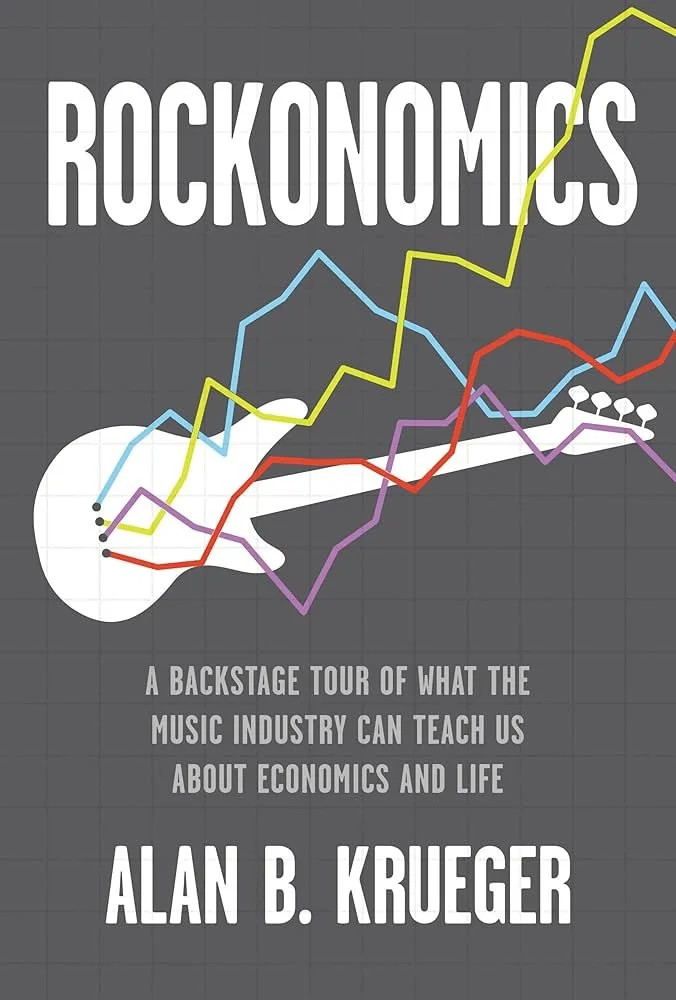
Alan Krueger's Rockonomics documents how the music industry has always been characterised by extreme concentration of returns at the top of the distribution curve.4 The streaming era has not created this inequality. It has intensified it and extended it downward, eliminating the middle tier of sustainable music careers that existed — imperfectly, with its own inequities — in the era of album sales and radio. The old model had significant problems. It also had a category of artist who could build a career on a regional following, a loyal niche audience, a slow-developing reputation. That category has largely been eliminated by a royalty model that requires global scale to generate meaningful income.
Trickle-down streaming economics — the promise that platform growth would eventually generate enough revenue to support the broader artist sector — has had more than a decade to demonstrate its validity. The evidence is in. Platform revenue has grown. Per-stream royalty rates have declined. The share of streaming income going to the top fraction of rights holders has increased. Artist poverty has deepened. Wealth has not trickled down. It has concentrated upward, with the efficiency of a system designed to produce that outcome, which is what it is.
The most insidious element of this arrangement is not the extraction itself but the ideological work that makes it invisible or acceptable. The language of opportunity, democratisation, and creative freedom has been deployed consistently to describe a system that offers none of these things to the majority of its participants. Artists are told they should be grateful for platform access. They are told that their poverty reflects insufficient engagement with the promotional tools available to them. They are told that success is achievable for anyone with sufficient talent and work ethic, which redistributes the structural failure of the system onto the individual failures of the artists it is failing.
Platform capitalism has been unusually effective at applying this mechanism to creative labour, possibly because the language of artistic vocation already contains the suggestion that suffering for one's work is ennobling rather than exploitative.
The structural alternative to platform capitalism is not reformed platform capitalism. It is a different ownership model, with different incentives, producing different distributions of the value that artists create.
Worker-owned and artist-owned platforms do not merely redistribute a larger share of existing revenue to creators. They change who decides how revenue is distributed, what content policies apply, how the recommendation infrastructure works, and whose interests are represented when those decisions are made. The cooperative model is not a charitable impulse applied to a commercial structure. It is a different commercial structure, with documented outcomes in comparable sectors and a growing body of evidence in the music industry specifically.
The objection that cooperative platforms cannot compete at Spotify's scale misunderstands the argument. Cooperative platforms do not need to replace Spotify to change the conditions facing independent artists. They need to demonstrate, at working scale, that a different royalty structure and a different ownership model are operationally viable — that the choice between Spotify's model and nothing is not the only available choice. Demonstration at working scale changes what is politically and economically possible for the sector, which is the precondition for the larger structural changes that would require regulatory intervention and industry-wide reform.
The streaming prosperity illusion has been functional for two decades because the alternative was genuinely not visible. It is becoming visible. The interesting question now is whether the artists who built the platforms that are currently failing them will direct their energy toward reforming those platforms or toward building the alternatives that the evidence suggests are necessary.
Artist poverty in the streaming economy is the predictable outcome of a system designed to extract value from that labour and distribute it elsewhere.
Recognising this is the precondition for doing something other than waiting for conditions to improve within a structure that produces the current conditions by design.
The alternative is building platforms whose structure aligns with the interests of the people who make the music — where 'platform growth benefits artists' is an architectural fact, embedded in governance documents and ownership structures rather than expressed as an aspiration in annual reports.(5) These platforms exist in early form. They are underfunded relative to their commercial counterparts and understudied relative to their importance.
Platform capitalism has had its fair trial in the music industry. The verdict is in the data. It is time to build the alternative.
Notes
Trichordist Streaming Price Bible 2024; Bloomberg Billionaires Index; Strategic Organising Center Amazon injury report; EPI gig economy compensation analysis. https://thetrichordist.com/streaming-price-bible/
Support Act Wellbeing Survey 2024; WAM industry income research. https://supportact.org.au/wellbeing-survey/
3. Dani Fikre, 'How Streaming Ate Africa's Music Economy,' Africa is a Country (2023); IFPI Global Music Report regional analysis. https://africasacountry.com
Alan B. Krueger, Rockonomics (Currency, 2019). https://www.penguinrandomhouse.com/books/318823/rockonomics-by-alan-b-krueger/
Platform Cooperativism Consortium; Trebor Scholz and Nathan Schneider, eds., Ours to Hack and to Own (OR Books, 2017). https://platform.coop
If you've made it this far, you probably care about where music is headed.
So do we — that's why we built something different. The Pack Music Co-operative is Australia's first musician-owned streaming platform: cooperative-governed, human-curated, and built on the radical premise that the people who make the music should own the infrastructure that distributes it.
Join the Pack — become an early adopter member, support our crowdfunding campaign, or lend your voice as an Ambassador: 👉 packmusic.au/join-the-pack
Back the campaign — every dollar goes directly toward getting us to launch: 👉 crowdfunding.startsomegood.com/thepackmusiccoop
Read our story — where we came from, why we built it, and what we believe: 👉 packmusic.au/who-we-are
Say hello — we genuinely want to hear from you: 👉 packmusic.au/contact